09 March 2011

The Taj Mahal of the North


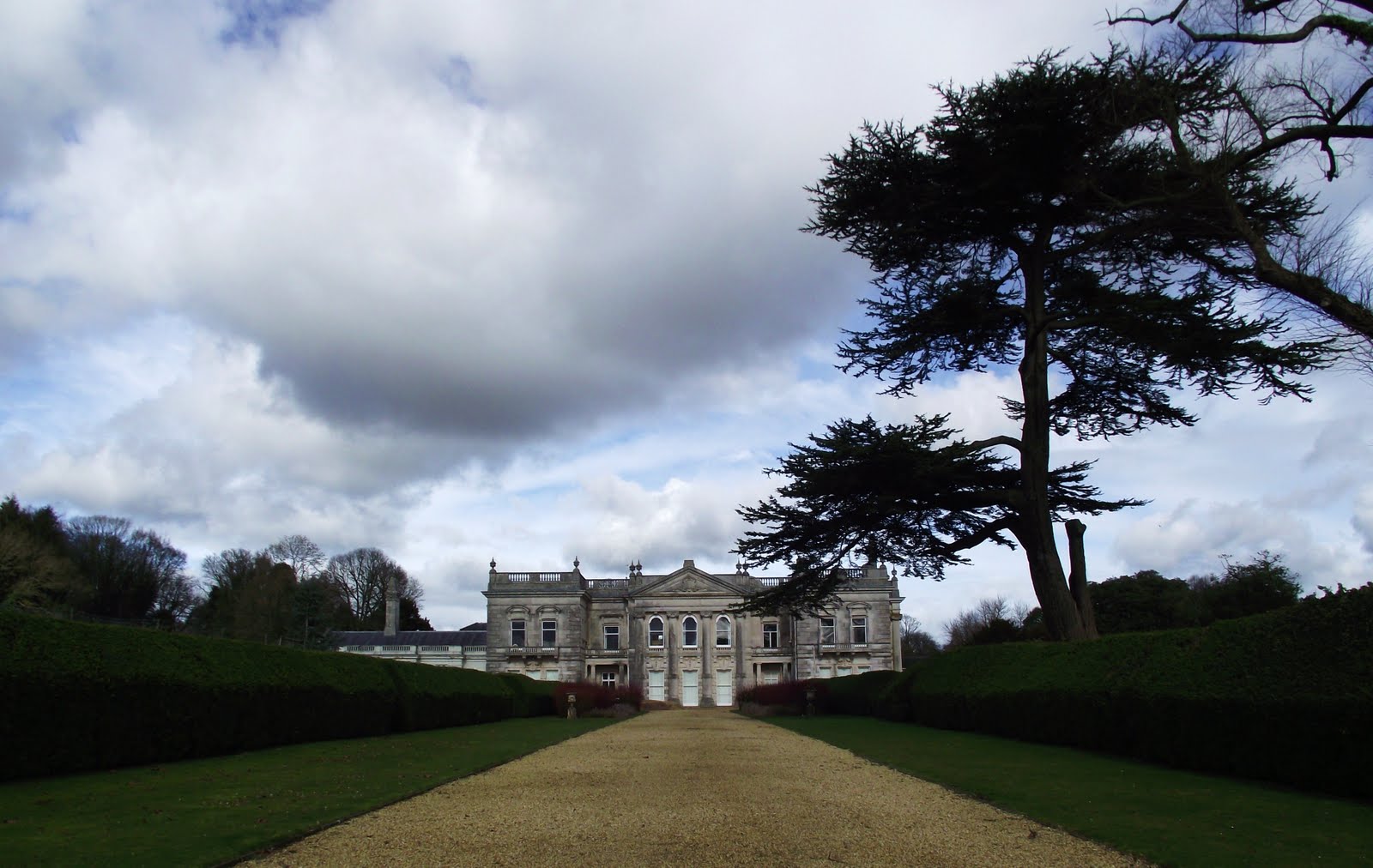
Williamson Park was laid out in the sometime quarries of Lancaster Moor from which was extracted the stone used in many of the city's buildings. It was landscaped in 1877 by John Mclean, and financed by James Williamson Snr, providing employment for locals put out of work by the cotton famine occasioned by the American Civil War.


James Williamson Jnr, later Lord Ashton, made his millions from the linoleum and oil-cloth for which Lancaster was famous. He raised the 150 feet tall Ashton Memorial to his second wife, Jessie. Commenced in 1906, it opened just three years later. Sir John Belcher's design made use of a steel structure, supporting Portland stone cladding. The grand steps are of Cornish granite, and the dome is clad with copper.


The folly was damaged by fire in 1962, but it was the steel armature that proved to be its undoing, having suffered from severe rusting. The memorial was closed in 1981, and restored 1986-87. The internal floor is of red, black and white marbles.


Also not accessible in the 1980s was the Edwardian Orangery, now renovated and reopened as the Butterfly House. Unfortunately it has had built beside it a rather tacky cafeteria and, behind, some even tackier small animal and insect enclosures. A red rose of Lancaster has been laid out in pebbles between the orangery and the memorial.

08 March 2011

Satis House Located?


The hard winter hasn't been at all kind to Calcott Hall (YMGW passim). The walls appear in reasonable shape, although they won't be for much longer, as in many places there is very little mortar remaining. The first two floors of the central staircase seem fairly sound, but the rooms giving off these are in a very poor state of repair.


The photographs suggest that the Hall is in better condition than it is. New floors are needed throughout, and new joists in a number of the rooms. The doors with semi-circular lights, giving off the hall and stairs, are in good condition, but all the exterior doors and windows likely need replacing. The latter are universally broken and letting in much water. Some rooms have been invaded by ivy.


Compeyson jilted her at twenty to nine, not twenty-five to twelve, but it could be Miss Havisham who stopped the clock - the Hall is in a decaying time warp. The top floor is in a terrible state. The roof is missing slates and the lantern has collapsed entirely. Miss Havisham must have sat below it in her wedding dress.


It will not be much longer before the central staircase, inundated with water from above, starts to deteriorate badly. The extensive courtyard buildings are suffering too, many slates having been deliberately removed. Not content with owning one of the most awful cars ever made, the erstwhile occupants of the Hall had two Morris Marinas!

04 March 2011

Karan Anne Porter


Thursday 4 March 1965 to Wednesday 4 February 2009.
Photograph: University of Lancaster, 1984.

Hereford, Not Mappa Mundane


Hereford's pièce de résistance is, naturally, the cathedral, but the city is home to a number of attractive buildings (and some dire ones). Grade II* listed, the town hall is in the true tradition of local authorities ensuring the best for themselves. Opened in 1904, it's constructed of brick, the Baroque frontage faced with terracotta mouldings.


Fosse House, so named as it is built on part of the moat (Latin: fossa) of long-gone Hereford Castle, was designed by Sir Robert Smirke, erstwhile pupil of Sir John Soane. Smirke is famous for the British Museum, Covent Garden Theatre, and Edinburgh's Royal College of Physicians. Completed in 1825, Fosse House is late-Georgian. Note the hexagonal chimneys and the octagonal glazing bars.


The Old House, built 1621, stands self-consciously in the middle of a modern shopping centre and with its feet about a foot below current pavement level. It started life as part of Butchers' Row, which was progressively demolished from the early nineteenth century, when the street alignment was altered; and now stands alone, somewhat Disney-esque in its isolation.

01 March 2011

British Petroliana?


The Anglo-American Oil Company Ltd was formed in 1888, a British affiliate of John D. Rockefeller's Standard Oil Trust. This last was dissolved in 1911 following a ruling of the US Supreme Court, and over 30 independent companies resulted. One, Standard Oil, acquired AAOC - anti-trust legislation has never been that effective in the oil and petrol business!


AAOC employed numerous brands for its imported motor spirit - Pratts, Pratt's Perfection Spirit, Anglo's Taxibus Spirit (commercial vehicles), Anglo's Benzole (a petrol and coal-tar mix), Pratts Ethyl (a petrol and alcohol mix), and Pratts High Test. The possessive apostrophe came and went, but in 1934 Pratt's/Pratts disappeared as AAOC adopted the phonetic version of Standard Oil - Esso.


The Mexican Eagle Oil Company was formed in 1900 to exploit the Mexican oil fields - it had exclusive rights in several states of the country. In 1919 Mexican Eagle was bought jointly by the Royal Dutch Petroleum and the Shell companies (now combined as Royal Dutch Shell). "Shell-Mex" was a resultant brand. "Mex" signs are likely pre-1919. In 1938 Eagle was nationalised by the Mexican government and became Petróleos Mexicanos (PEMEX).


British Petroleum has a long and complex history. In 1901 one William Knox D'Arcy negotiated an exploration agreement with the Shah of Persia. D'Arcy sold the majority of his rights to the Glasgow-based Burmah Oil Company, which in 1909 formed the subsidiary Anglo-Persian Oil Company.

Winston Churchill, instrumental in moving the Navy over to oil, negotiated with APOC to secure supplies, and by 1913 the government took a controlling stake. Ironically, the British Petroleum brand was a German creation, an agency for the sale of Shell petrol in the UK. Its assets were seized on the outbreak of WWI, and in 1917 purchased from the trustees. It became a marketing subsidiary of APOC.


When Persia changed its name to Iran in 1935, APOC became the Anglo-Iranian Oil Company. It was not until 1954 that the company became officially known as British Petroleum, although the brand had been in use for over 45 years. The BP shield was designed in 1920, when the "BP" letters acquired their rounded serifs. With its pointy serifs, and despite the Union flag, this sign is possibly from the 1910s and, hence, for the German agency.


Surely Dunlop was a British company? The Dunlop Pneumatic Tyre Company Ltd was formed in Dublin, but in 1889, when all Ireland was still part of the United Kingdom. Divisions were established in Europe and the States in the early 1890s; and in 1896 Dunlop registered its trademark and created a subsidiary in England. Car tyre manufacture commenced in 1900, and in 1918 production moved to Fort Dunlop, Birmingham.

27 February 2011

Sorviodunum = Sarum = Salisbury


Two miles north of Salisbury is Old Sarum, the original site of the city. Massive Iron Age ramparts, raised five millennia ago, remained intact until the arrival of the Romans, who built a fort in the river valley and knew the place as Sorviodunum. William the Conqueror later built a motte and bailey castle within the ancient earthworks. A stone keep was erected in 1110, and a royal palace was completed 30 years later.


The first Salisbury Cathedral, erected in the outer bailey, was finished in 1092, but was seriously storm-damaged just five days after its consecration. It was enlarged by, in two principal stages to 1190, the addition of transepts and a grand west front, this last overseen by Roger of Salisbury, both bishop and Chancellor.


Church and state didn't always see eye-to-eye, and in 1219 the cathedral was demolished. A replacement, about which the modern city of Salisbury grew, was commenced on church land the following year. Amazingly, it was not until 1834 that the foundations of the Old Sarum cathedrals were noticed. They were excavated as recently as 1912-14.

26 February 2011

The Bastards of Blandford


Blandford Forum, Shottesford Forum in Hardy's Wessex novels, is a market town famed for its Georgian architecture. The market goes back to the thirteenth century, but the town was ravaged by fire in 1731. John and William Bastard, local bigwigs, builders and furniture makers, set about rebuilding it over the next 30 years. The church of St Peter and St Paul, although built 1735, is classical in style.

Edmondsham


Although closed, the owner of Edmonsham House, a gorgeous Tudor manor house of 1589, with Georgian additions, allowed access to the grounds, six acres of lawns, shrubberies and trees. Edmonsham is the family home of Julia Smith, in whose family it has been since the sixteenth century. The symmetrical Victorian stable block is stunning, but the nearby garages and sheds, and a petrol pump, caught the eye. Housing for various vehicles and on-site motor spirit - oh for the 1920s!


Just beyond the grounds of the manor house is the diminutive St Nicholas, built of Heathstone rubble and flint. The nave and chancel are twelth century, the north aisle is fourteenth century, and the stubby tower is early fifteenth century. Framed by ancient yews, it is the very epitome of an English rural church.

Tidworth and Tedworth


12 miles south of Marlborough in Wiltshire is Tidworth, and hard by the A338, its spire visible from the road amidst a surrounding small wood, is St Mary's. This was commissioned by Sir John Kelk, Victorian civil engineer and contractor, who built, amongst other landmarks, Victoria Station and the Albert Memorial. Designed by John Johnson, architect of Alexandra Palace (Ally Pally), the church was built 1879-80. It was declared redundant in 1972.


An avenue of lime trees leads to Tedworth House, acquired by Kelk in 1876 when, on becoming High Sheriff of Hampshire, he bought the Tedworth Estate. The house had been built in Palladian style by Thomas Assheton Smith III, between 1828 and 1830. Kelk extensively rebuilt and remodelled it between 1878 and 1880.


17 years later the Army acquired the whole estate for military training. Tedworth House is currently undergoing renovation by the Help for Heroes charity to provide a personnel assessment and recovery centre. There are extensive stables, some of which housed Smith's 50-odd horses; various military buildings, including Nissen huts; and, at present, woods full of snowdrops.


The grounds are home to Tidworth Combined Services Polo Club. The polo ground, second largest in the UK, is named after one General Sir Bertie Fisher, who oversaw it being made by the 2nd Cavalry Brigade when commanded by him in 1922. Recalled from a TV documentary in the 1980s, from the mouth of a débutante: "Doesn't everyone meet their future husband at the polo club?"

24 February 2011

Much Wenlock Quarries II


To one side of the limestone escarpment of Wenlock Edge is Lea Quarry, operated for the production of roadstone until about four years ago, when extraction became uneconomic. Wenlock is of international significance in geological circles, part of the Silurian Period (440-410 million years ago) being known as the Wenlock Era. As at Farley Quarry (YMGW passim), just along the road, brachiopods and coral are in abundance, as the Edge was a reef back before God was invented.


The National Trust, which owns and manages seven miles of the Edge, about half its length from Much Wenlock to Craven Arms, has reportedly expressed an interest in acquiring the quarry as a wildlife refuge. For now, the elevators and crushers of the quarry, which would hopefully remain in situ, are starting the long journey of returning to the earth they served to work.

20 February 2011

Shrewsbury in 200 AD


Wroxeter, when it was still Viroconium Cornoviorum, was the fourth largest city in Roman Britain, having developed from a legionary fortress. English Heritage has worked with Channel Four in the making of a documentary, Rome Wasn't Built in a Day, modern builders applying materials and techniques of the period to recreate a second century Roman villa. This, raised on an artificial platform to protect the underlying archaeology, is based on excavation evidence from the city, occupied from 58 AD for half a millenium, at its height home to 15,000 people.


The reconstruction, which took just six months to complete, includes a self-contained shop (which would have had living space above), porter's lodge, and reception/dining room with frescoes and mosaic floor. There's also a three-room bathing facility - frigidarium, tepidarium and calderium. The rooms, all connected by an open corridor, are in some cases part-finished, so as to exhibit the various building techniques used.

18 February 2011

Planes, Trains, Boats & Automobiles


Amos Bell of Pool Quay has an Interceptor SP (six pack), LPH 500K, very smart in Porsche Guards Red with a black vinyl roof. Amos previously had an Interceptor II in Germany when flying helicopters for the RAF. He has some wonderful photographs of the Jensen in the back of a Chinook - with bags of room to spare!


At Canal Central, Fiona has a Citroën 2CV Dolly, apparently one of only six hundred in grey and cream livery, made for export to the UK - most are red and white. In the adjoining shed is Peter Clare's 10¼" gauge Canadian Pacific Hudson Class 4-6-4 live steam locomotive. This was designed and built between 1937 and 1941 by one Perry Routledge, ex-CP locomotive engineer; and first shown at the Vancouver Exhibition of 1941.


Mr Routledge died in 1960, and the locomotive was last in steam in that decade. Peter brought it to the UK in 2004, since when it has been restored. A new boiler was recently pressure-tested, and the aim is to have the locomotive operational once again this summer. It is capable of what must be a rather scary 50mph.


In yet another shed are two Russell and Newbery marine engines, shipped back from Canada. R&N was formed in 1909, in Altrincham, producing generators and lighting sets for grand houses in the days before the national grid. R&N built its own engines, originally petrol and petrol/paraffin. In the late 1920s it expanded into diesel units, and in the early 1930s it was R&N diesels that were installed in the new narrowboats of the Grand Union Canal Carrying Company Ltd.

15 February 2011

Beverley, Sisters


Regarded by many as the most impressive non-cathedral church in England, Beverley Minster is the jewel in the crown of a delightful town, full of attractive buildings and interesting corners. The minster was originally a collegiate church - the College of Canons was abolished, and the chapter house taken down, during Edward VI's reign - and is dedicated to St John. This is the Evangelist, not St John of Beverley, founder in about 700 of a local monastery, and who lies beneath the nave.

A serious fire occurred in 1188. In shades of the hubris of Golding's The Spire, the central tower was raised during the reconstruction but collapsed c.1213, taking much of the church with it. The present building was commenced c.1220. Work extended for about 200 years, so the east end and transepts are Early English, the nave largely Decorated, and the gorgeous west front (top) Perpendicular, although the whole looks and feels coherent. The new central tower, graced with a lantern, itself threatened collapse, and as a consequence was rebuilt yet again in the eighteenth century.


There's lovely blind arcading inside, with that in the north aisle decorated with numerous fourteenth-century stone carvings of musicians and their early instruments. The 68 stalls of the choir have eighteenth-century canopies and early sixteenth-century misericords, each one unique. Just around the corner is a street-side fat-bodied petrol pump, with swinging overhead hose.

10 February 2011

Much Wenlock Quarries I


Just north of Much Wenlock lies Farley Quarry. A geology website explains that the quarry reveals the uppermost strata of the Coalbrookdale formations, an alternating sequence of grey, shaley mudstones and thin, nodular, buff to blue-grey limestones. The limestone was once coral reef, 100 feet under warm seas. Brachiopod fossils can be picked up from the ground.


The site has for many years been used for off-roading and quad-biking. It appears to be undergoing extensive grading (and, on the other side of the road, around the lake, preparation for building). For the grading much building rubble has been imported. Amidst this is the remains of marble headstones, which hopefully haven't come from consecrated ground.

03 February 2011

Weston's Real Pier


Whilst he oversaw the construction of the Bristol and Exeter Railway, the great I.K. Brunel lived in Weston. The railway opened in 1841, bringing visitors from Bristol and the Midlands. Birnbeck Pier was built to entertain them. Designed by Eugenius Birch and opened in 1867, it provided tea rooms, various rides, and a photographic studio. It was lit in the evenings with gas. A new landing stage was added in 1872 and a lifeboat station in 1881 (rebuilt 1902). This last, with the longest slipway in England, is still operational; but otherwise the pier, listed Grade II*, is derelict.


It suffered storm damage in 1903, and the western jetty (built 1898) disappeared in 1920. The Birnbeck Island amusements closed in 1933 as a result of competition from the Grand Pier's funfair. During WWII the pier was used by the Admiralty for experimental weapons development - a Lancaster bomber dropped on it a large block of concrete. The pavilion was destroyed by fire in 1988, the pier was extensively damaged by a 1990 storm, and ultimately closed four years later. One now can't get beyond the remains of the cast iron turnstiles (above).

Weston-super-Mare


Weston is famous for the mud of the Bristol Channel on which the town sits. At low tide the sea is about a mile from the promenade, resplendently repaved with what must be hundreds of thousands of tons of granite, and edged with a splash wall into which are built numerous stone benches, at a total cost of £34 million. Near the prom stands the Weston Wheel, 130 feet in diameter and boasting 30 observation pods.


The Grand Pier, opened in 1904, was originally planned to be 6,600 feet long, and now extends 1,200 feet. The largest pavilion ever built on a pier was added in 1932/3, after a fire destroyed the original pier-end building in 1930. This Art Deco building in turn burned down in July 2008. A staggering £51 million has been spent on a replacement, opened in October 2010. Irritatingly, the owners allow children but not dogs on the pier, which suggests that it is as corporate and clinical as it looks from below.


Weston is an odd town. In January 1941 and June 1942 large swathes were destroyed by thousands of incendiary bombs; and these areas are home to ugly constructions of the 1960s. There are also though some fine Art Deco buildings, such as a Burton's from the 1930s, designed by Harry Wilson, the head of the firm's in-house architects - note the elephant heads.