31 January 2011

Avant Garde After 40 Years


Roxy Music was formed in 1970 by Bryan Ferry, the group's principal songwriter and lead vocalist, Brian Eno, and Andy Mackay. Generally referred to as Art Rock, Roxy's music was always avant garde, influencing punk, New Wave, and the synth groups of the 1980s.


Synthesizer maestro Eno long ago went his own way, but the current line-up continues to feature Phil Manzanera (very sharp guitar), Mackay (sexy saxophone and liquorice oboe), and Paul Thompson (drums and percussion). 40 years on, the music is still very fresh and edgy.


Roxy Music's album covers were always very striking, and the visual backdrop to the current 'For Your Pleasure' tour manages to be both stylishly retro and bang up to date, quite psychedelic at points. Highly recommended.

28 January 2011

The Beast is Back


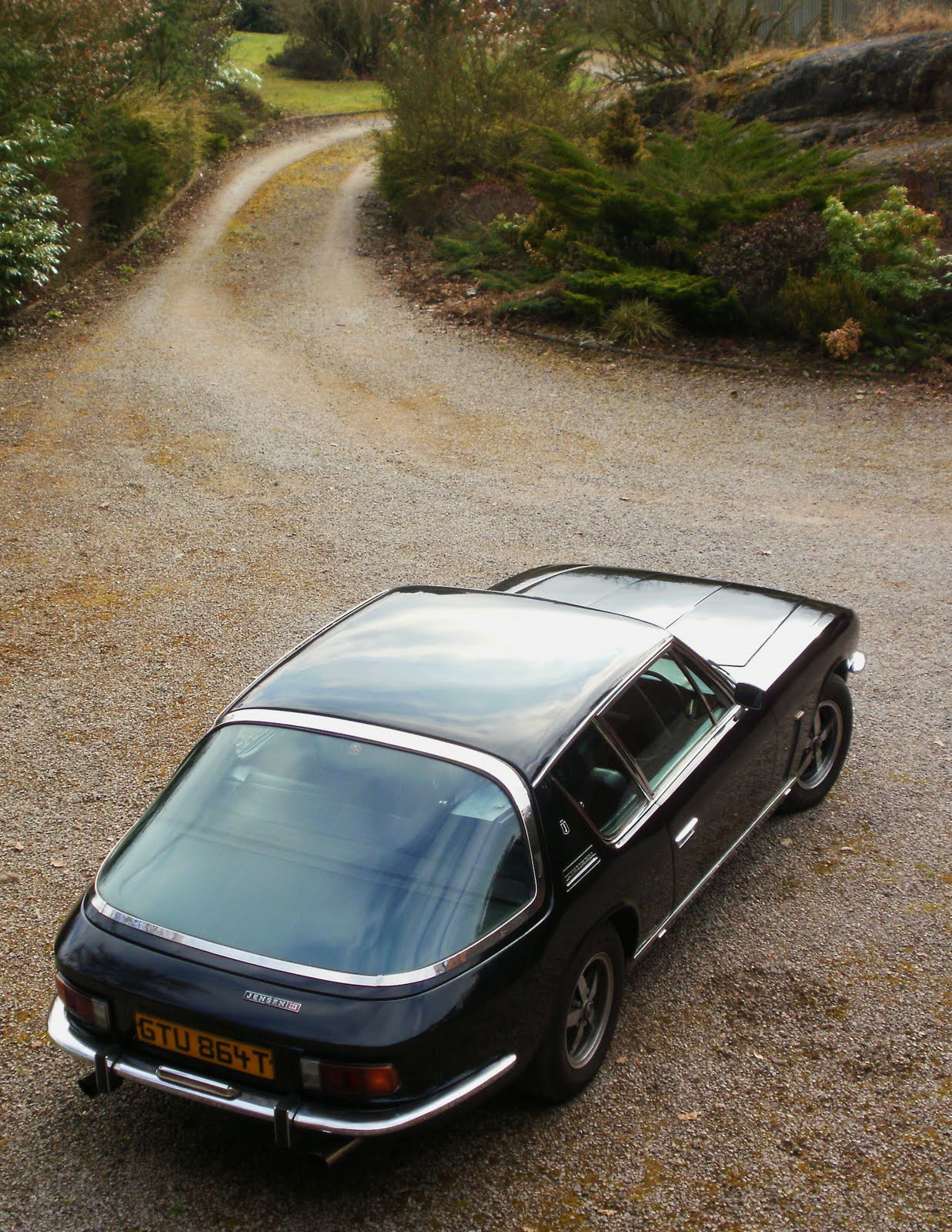
The Beast of West Bromwich is undergoing various works to ready it for its MOT. Done to date: ignition switch and hazard lights toggle switch replaced; radiator drained, repeatedly flushed, and refilled; bottom hose replaced; wheels removed and chassis, spring hangers, springs, bearings and rack all inspected okay; brake disks and calipers inspected okay; steering gaiters replaced. Road test served up no significant problems.


Still to be done ahead of test: replace full suite of brake pads; tension handbrake; bandage two exhaust leaks just below manifolds; square up steering wheel; fix nearside door catch; free offside seatbelt tensioner; replace a couple of grease nipples.

After (hopefully successful) MOT: adjust automatic choke and cold fast idle; replace battery with one of greater cranking amperage; reset bonnet release; overhaul fans. Beyond that work can commence on the interior: re-dye and feed leather; fix interior lamps; and so on ... a Sisyphean project.

13 January 2011

Lake Vyrnwy


The large dam at Lake Vyrnwy, built between 1881 and 1889, was the first in Britain to be stone-built, earlier constructions being earth embankments. The side facing the reservoir, at the time the largest of its kind in Europe, is vertical, not inclined, and the dam is consequently of great mass in order to resist the pressure. Over half a million tons of stone go to make up a monolith 1,172 feet long, 84 feet from lake bed to overflow sill, 161 feet from foundations to top, and 120 feet thick at its base.


The openings between the dam's 33 arches allow surplus water to flow over the top - Vyrnwy was also the first large dam not to have a spillway at one end. The compensation water for the River Vyrnwy is carried through tunnels 70 feet long and 15 feet in diameter, one beneath each of the two towers, in which are housed the valve controls.


Created to supply Liverpool with water, Lake Vyrnwy is about 4½ miles long. In its depths are the remains of the village of Llanwddyn. 37 houses, ten farmhouses, three pubs, two chapels, and a church were knocked down. The residents, both living and dead, were relocated to a new village further down the valley. A sculpure park adorns the outwash plain beneath the dam. Take a bottle of Bombay Sapphire with you - it's made with Vyrnwy water.

12 January 2011

Royal Spartanette Trailer Trailer


Many thanks to Rupert in Toronto for sending through information about this fantastic trailer, fully restored by a Michigan owner, and converted to provide both accommodation for himself and transportation of his classic cars. It's a 1951 Royal Spartanette 35-footer, built originally by the Spartan Aircraft Company. The ramps are articulated and enable vehicle access to a 21-foot mobile garage. It's up for sale - yours for $125,000, presumably excluding the 1955 Porsche Continental!

We Don't Get No Edjukayshun


With apologies to our American readers, it's not possible to let today's bleating of UK teaching unions pass without comment. Their response to publication of the fact that only 16% of 16-year-olds achieved the new 'English baccalaureate' has, all too predictably, been that the measure is unfair, in that it is retrospective. What they mean is that had they known in advance which subjects would go to make up the league tables, schools would have concentrated their efforts on those.

This is admitting what we have always known, that much teaching has nothing to do with education but a great deal to do with coaching to scrape examination passes. Were teaching of a universally decent quality it wouldn't matter which subjects were placed under the microscope. Moreover, we're not talking here about abstruse subjects, but English, mathematics, a second language, geography or history, and two sciences. Surely at least the first two should be regarded as important irrespective of the measurement system in operation?

That only one in six pupils obtain, in subjects critical to their life chances, the economy, and maintenance of culture, what used to be regarded as passes but are now referred to as 'good' grades (GCSE A to C), is a terrible indictment of the English education system. The teaching unions can whinge all they want. Schools exist for the benefit of their pupils, not for that of their teachers.

06 January 2011

Ruyton, VI.I.MMXI

Ruyton XI Towns is the only place in the world that features Roman numerals in its name. It was known as Ruyton of the XI Towns from the XIIth century, when a castle was built here. The XI townships were Coton, Eardiston, Felton, Haughton, Rednal, Ruyton itself, Shelvock, Shottaton, Sutton, Tedsmore, and Wykey. The castle was badly damaged in MCCIII and again, by Owain Glyndŵr, in MCCXII.


In MCCCVIII the Earl of Arundel attempted to refound the town as New Ruyton, and a charter that gave it the same status as the County of Bristol was granted. The castle was rebuilt in MCCCXIII, yet lasted only to the end of the century. Its few remains stand next to the church - likely built at the same time as the castle - about which are some fine yews. The town declined as it continued to be subject to the depredations attendant upon its Marches location; and it ceased to be a borough in MDCCCLXXXVI.


The erosion of Ruyton's status is mirrored in the sandstone in which are constructed many of the buildings of what is now referred to as a village. Cut into the live rock is a memorial to those killed in the two world wars. It seems a shame that, instead of being carved in Arabic numerals, the dates of these aren't given as MCMXIV-MCMXVIII and MCMXXXIX-MCMXLV.

03 January 2011

Goering's Balls Not Small After All

The description "important" is massively overused in connection with books, but James Wyllie's Goering and Goering certainly deserves the epithet. The subtitle - Hitler's Henchman and His Anti-Nazi Brother - signals what the book is about; but what comes through only from a full reading is the immense bravery of Albert, who saved hundreds, possibly thousands, from persecution.

Reprisals and the crude settling of scores often serve to obscure the good done by those prepared to stand up to the brutality, the stupidity, the ineptitude, of corrupt and immoral regimes and organisations. As Pastor Martin Niemöller noted, it is often the soi-disant intellectuals that allow these things to happen:

They came first for the Communists,
and I didn't speak up because I wasn't a Communist.

Then they came for the trade unionists,
and I didn't speak up because I wasn't a trade unionist.

Then they came for the Jews,
and I didn't speak up because I wasn't a Jew.

Then they came for me
and by that time no one was left to speak up.
Albert Goering's efforts and achievements deserve wider recognition.

29 December 2010

Phoenix Rising


Seventy years ago Herbert Mason, chief photographer for the Daily Mail, took what has become one of the iconic images of WWII. On 29 December 1940 the Luftwaffe dropped on London 120 tons of explosive and over 20,000 incendiary bombs. Eight of Wren's churches perished, and his great cathedral escaped only very narrowly. More than two dozen incendiaries fell on and about St Paul's. One temporarily lodged in the wooden trusses of the dome, and it was only when the bomb dropped onto the Stone Gallery that the cathedral was saved.

Mason took his photograph from the roof of the Mail's offices near Fleet Street, about half a mile from Wren's masterpiece. The image wasn't published for two days whilst the propagandists sought to determine its likely impact on morale. It has at times been suggested that it may have been doctored in the darkroom to darken the smoke of the very real fires, and thus emphasize the sense of a phoenix arising from the flames.

Montgomeryshire Morris in Meifod


On the hills high above Meifod lives Fran Leeman. Resting in her yard is a Morris FFK truck. The registration is NEP 587. The letter combination EP was the area identifier for Montgomeryshire, so it's close to its original home. In 1963 a year prefix was added to registration numbers; the truck was thus likely built in the three years to then. Under a cover is a straight-six Daimler in British racing green that had belonged to Fran's father, who had previously owned a Citroën SM, powered by a Maserati V6.

25 December 2010

Pontcysyllte Aqueduct


The Pontcysyllte Aqueduct, designed by Thomas Telford and built under the supervision of canal engineer William Jessop, is the highest navigable aqueduct in the world. It is also the longest aqueduct in Britain, a Grade I listed monument, and a World Heritage Site. It carries the Llangollen Canal at a height of 126 feet over the River Dee, between Froncysyllte (of Male Voice Choir fame) at its southern end and Trevor at its northern.

18 hollow piers, built of finely dressed sandstone, with narrow joints of lime mortar into which was mixed ox blood, support arched cast-iron ribs, four for each of the 19 spans of 53 feet. Each rib, the internal pairs pierced and the external pairs solid, is made from three voussoirs. Atop these arches sits a cast-iron trough, 1,007 feet long, 11 feet 10 inches wide, and 5 feet 3 inches deep.


The plates of the trough's bed are not affixed to the arches, but lugs fit either side of the ribs to keep all steady. The trough's sides are formed of bolted flanged plates of cast iron, also voussoirs, but only so as to form a decorative feature. The joints between the plates were bedded with Welsh flannel, white lead and iron particles.


Commenced in July 1795, the aqueduct was opened only ten years later, having cost just £47,000 (about £3 million at today's prices - fantastically cheap). When construction was completed the trough was filled with water and left for six months to test for leaks. Not a drop was lost, and the aqueduct opened in November 1805.

A towpath is mounted to one side of the trough, with a railing along its length. There are mounting holes on the other side, but no railing was ever fitted. The water level is just six inches below the top edge of the trough. As steeplejack Fred Dibnah put it: "... even for somebody like me with a head for heights, it can be a bit unnerving, because it feels as though the barge you are on is going to float right off the edge." From this height and in the snow, even the sewerage farm below looks attractive.


But how does one pronounce Pontcysyllte? The BBC's Pronunciation Unit recommends "pont-kussuhl-tay."

18 December 2010

Le Drapeau Tricolore


About four inches of snow at home. It's interesting that, when referring to snowfall, the BBC still, rightly, uses the imperial system, especially given that it's otherwise capitulated to the use of metric units on so many fronts. We all still use gallons too: how many ever state the miles per litre that their car will manage?

14 December 2010

Cromer-wick Green


Over 38 feet tall to its rooftop, the windmill at Cromer is Hertfordshire's only surviving post mill. In a post mill the entire body (or buck), complete with all the grinding machinery inside, balances on a massive wooden post - in this case 18 feet tall and almost two feet square - which is itself supported by a timber trestle. Mounted above the access ladder is a fantail, which catches the wind. By means of iron wheels on a track that encircles the mill, the whole construction is thus automatically turned to enable the shuttered sails, 56 feet across, to face into the wind.


There has been a windmill here for over six centuries. The present one was built sometime between 1681 and 1720. In around 1860 it was blown over and rebuilt, but by the 1920s it had fallen into disrepair, wind-driven milling no longer being economic. By the end of that decade the mill had lost one sail and the other three had been removed. An appeal in 1967 enabled the mill to be saved, but it wasn't until 1998 that various grants enabled it to be restored to working order. The tax known as the National Lottery does have some benefits.

09 December 2010

Cockshutt, Then Sleap At Dusk


Cockshutt ROC post was decommissioned in 1968 and is now welded closed. The ingress of air and fallout has been improved by the cutting of ventilation slots in the access hatch.

Nearby Sleap, pronounced "Slape", is an operational airfield, utilised by Shropshire Aero Club. From 1943 to 1964 it was an RAF base, a satellite to RAF Tilstock. No. 81 operational training unit flew Whitley bombers here, at times at night. In early 1944 these were used to tow Horsa troop gliders on practice missions in advance of D-Day; and from November that year replaced with Wellingtons.


The club's bar and café, in the control tower, is named after Flt Lt Eric Lock DSO, DFC and Bar, born in Bayston Hill. Lock was the most successful British-born pilot of the Battle of Britain, during which he shot down 16½ enemy aircraft - one 'kill' was shared with another pilot.

06 December 2010

Bomere Heath ROC Post


A passing ex-BT engineer points out the location of this ROC post (YMGW passim). The posts were formed into clusters, and could communicate with each other, and with Group HQ, by means of a private circuit using a TeleTalk - shades of Orwell's 1984 telescreens. One post in each cluster was equipped with UHF radio, providing backup in the highly likely event of the telephone lines being taken out ... although presumably the aerial mast would have gone the same way. Bomere Heath was such a master post: there's an aerial connection point on the secondary ventilation shaft (above). Atop the primary ventilation shaft (below) is the circular mount for the ground zero indicator used to determine blast direction and elevation.

05 December 2010

"Check Your Oil, Sir?"


At Crickheath Wharf, near Llynclys, are a very large vintage petrol pump and an old oil cabinet. Both bear plenty of peeling coats of paint.

04 December 2010

Llanymynech ROC Post


The Royal Observer Corps (ROC) was formed in 1925, the role of its volunteers to identify enemy aircraft. In the 1950s the ROC was additionally charged with reporting on nuclear blasts. 1,563 underground posts were built throughout the UK, often at the same sites as the earlier aircraft identification, or Orlit, posts. Each post had an entrance shaft (top), giving access to two concrete-built rooms, one about 15 feet by 7 feet 6 inches, containing bunk beds, table, chairs and cupboard; and the other a chemical toilet. Ventilation was provided via louvred vents alongside the access shaft, and to a separate air shaft (below) giving on to the other end of the underground chamber.


Crude instrumentation provided for determination of the bearing and elevation of nuclear bursts, level of radiation, and mega-tonnage. The absurdity of nuclear civil defence is indicated all too strongly by these posts: the air vents would have allowed the ingress of radiation; and the telegraph poles and lines on which communications largely depended would have been flattened.

In 1968 more than half the posts were closed. The remaining posts, including this, were closed in 1991, with many of the sites sold off to mobile phone companies, to whom their positions on high ground made them desirable locations for masts. At this site above Llanymynech the brick-built observation post still contains the wooden mounting for the observation instrumentation and chart.

03 December 2010

You Shall Go To Ball


Near Maesbury is the hamlet of Ball, home to a pub with a name of which no-one seems to know the origin - The Original Ball. Just along the lane from the pub is the Bethesda Primitive Methodist Chapel, built in 1834, closed in the 1920s, and now derelict.


The Hoover Constellation was introduced in 1952, and discontinued in 1975. It 'floated' on its exhaust, like an hovercraft, with just enough lift to carry a small child, and thus to irritate the person trying to vacuum.


Further along Ball Lane is Ball Mill, which dates to between 1500 and 1700. A leat gives off the River Morda to drive an unusual arrangement of twin overshot wheels, in series. The mill is Grade II listed, but little information is available as to its history.

28 November 2010

Arrival of the Argonaut


Using a dually pickup, Stuart Connell shifts the Silver Streak Clipper (YMGW passim). He's assisted by his son Richard, who's a wheelwright, a highly skilled occupation. A quick initial clean serves to remove a number of small abandoned wasp or bee nests and what appear to be old termite homes. This is most decidedly going to be a long-term project. The floor has been newly boarded and the aluminium belly replaced, but among other things required are brake controls, wiring, plumbing, and a complete internal fit-out to provide storage, seating, sleeping, and cooking facilities. And that's before getting to the repair and polishing of the exterior.

27 November 2010

Tanat Valley


The Tanat Valley Light Railway opened in 1904. Operated by Cambrian Railways, the line ran from Gobowen, through Llynclys and Porthywaen, to Blodwell Junction. At Gobowen the line joined up with Cambrian's network; and at Blodwell with the erstwhile Potteries, Shrewsbury & North Wales Railway. At Llanddu Junction, part way along, a branch line headed off to the quarries at Nantmawr.


Railway ownership and operation around here was, and remains, complicated. Major rationalisation came on 1 January 1923, when all lines in the area became part of Great (God's) Western (Wonderful) Railways. 25 years later, to the day, came nationalisation. Through the 1950s and 1960s there were numerous closures in British Rail's Western Region. The line between Gobowen and Blodwell remained open, for quarry traffic, until 1988.


The Cambrian Railways Society holds a lease on the line. The track has never been lifted, so the Society has, in some respects, less of an uphill struggle than its cousin, the Cambrian Railways Trust, the latter looking to reinstate the line between Oswestry and Llanymynech. At St Michael's in Llanyblodwel the ladies cleaning the church for Christmas kindly provide a cuppa to the cold examiner of bosses.

25 November 2010

The Full Monty


Dominating the county town of what used to be Montgomeryshire, the castle, at least in its stone form, was commenced in 1223, with the inner ward and its gatehouse completed in just five years. The middle and outer wards were added in 1228. The castle was slighted in 1649 after falling into the hands of the Roundheads.


Montgomery is the oldest borough in Wales, and boasts a number of fine buildings from various periods, especially the Georgian. The Norman church, begun 1227, is home to both half a dozen or so misericords, and the lavish tomb of Richard and Magdalene Herbert, parents of the sixteenth-century poet and divine George Herbert.

The town is famous for the hardware store of R.H. Bunner and Son, which has traded since 1892. This is the sort of shop in which Ronnie Barker would have asked for "fork 'andles" and Ronnie Corbett would have fetched four candles. If you can't get it here, it doesn't exist.


On the B4385 to Bishops Castle are a couple of Gilbarco petrol pumps, one a T8 'Fat Lady' of the 1920s. Petrol was last four and three a gallon (about 21 pence for 4½ litres) in 1963, which is presumably when this fat lady last sang.