11 August 2011

Japanese Mustang


Hometyre, a Shrewsbury-based business started in 2003, provides a fully mobile puncture repair, tyre replacement, and balancing service. It has been successfully franchised into many areas, and quality control and service quality remain second to none. Very highly recommended.


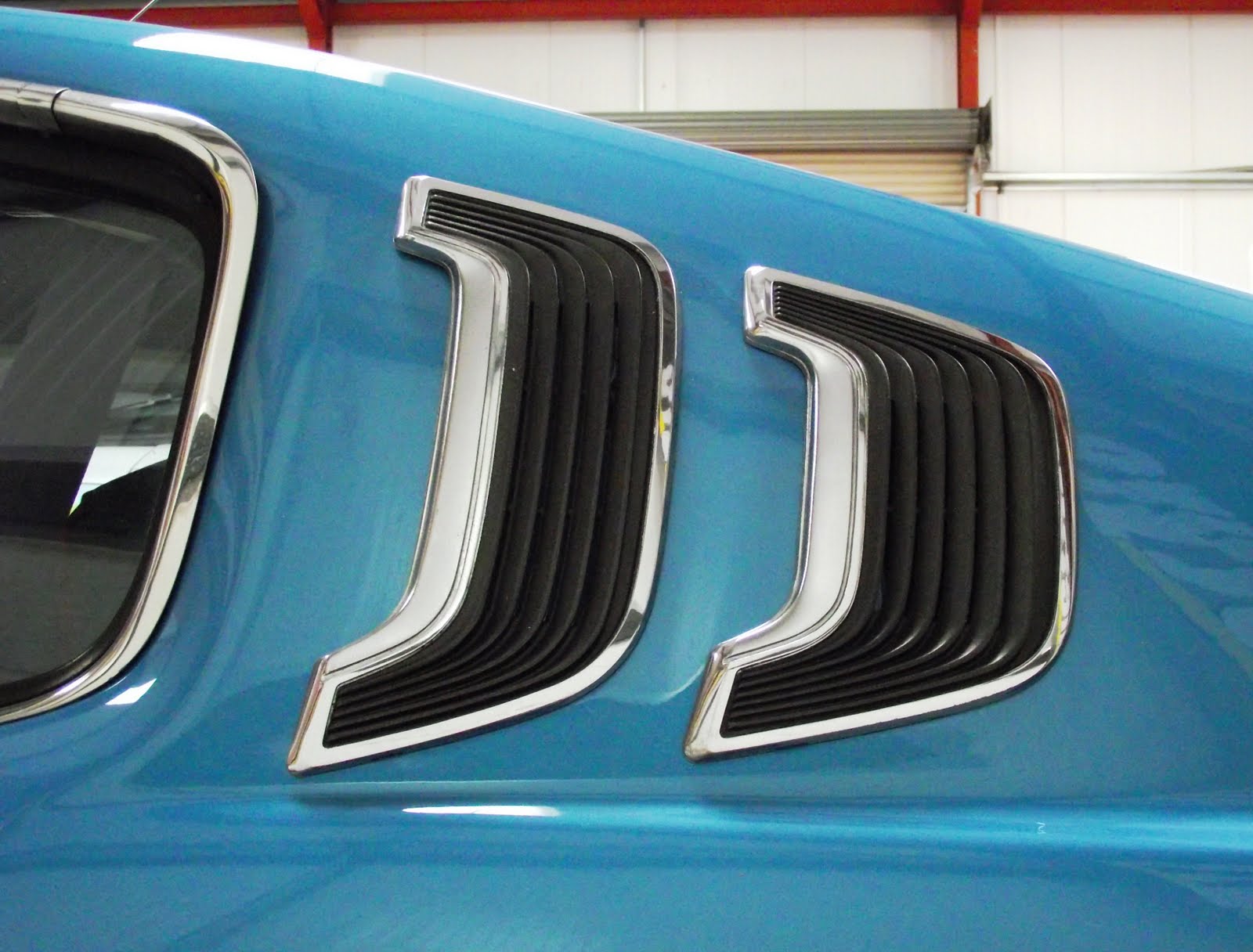
Owner Andy Lawrence is also the proud owner of a Toyota Celica Liftback ST2000. The Liftback was launched into the Japanese market in 1973, and export models appeared from 1976. It was commonly referred to as the Japanese Mustang, given such Ford Mustang styling cues as the tripartite rear lamps. The car has been superbly resprayed by Body Beautiful (Cars) Ltd of Bridgnorth.

09 August 2011

Folding Stuff


In the mid-1970s Andrew Ritchie, an engineer, radically improved the standard design for folding bicycles. The rear subframe and wheel of the Brompton folds down and beneath the central frame, enabling the bicycle to be compressed to less than two feet square. With the handlebars folded down, front wheel folded back, and nearside pedal folded up, it is under 11 inches wide, and weighs just 27 lbs. Once a shed (well, bedroom) wonder, and now recognised as an engineering marvel, the Brompton can be ready for action in 20 seconds.

08 August 2011

Mining Minerals in Minera II


Just down the road from where Minera's limestone was mined for lead and zinc ore, the same rock was quarried for lime. The Minera Lime Company was formed in 1852, and in 1865 built a Hoffman kiln, one of just three in Britain for burning lime, the others being at Langcliffe, Yorkshire, and at Llanymynech, on the English/Welsh border (YMGW passim). Although the works closed in 1972, quarrying continued until 1993, for roadstone.

Mining Minerals in Minera I


The carboniferous limestone outcrop that starts at Llanymynech passes through Minera, in North Wales. Although it is believed that the latter area was mined by the Romans, the first documentary evidence is from the early 14th-century.


Systematic work in search of galena (lead ore) and sphalerite (zinc ore) commenced in 1720, but Minera always suffered from severe problems with flooding. A Boulton and Watt pumping engine was installed in 1783, and by 1816 seven pumping engines were in operation.


However, cooperation between the various owners militated against effective dewatering, which was not achieved until the Minera Mining Company consolidated all leases in the area in 1849. Over the next two decades Minera became Britain's largest producer of galena and sphalerite.


The mine closed in 1914. At Meadow Shaft (1,200 feet) are preserved the engine house and chimney; and working dressing plant, including separator jigs and circular buddles (used to separate out fine ore particles). Rails, trucks, and lengths of iron pump pipe complete the picture.

07 August 2011

Welsh Banger Racing


On the floodplain of the River Vyrnwy at Meifod, Bron-Y-Maen Farm plays annual host to charity banger racing. There are a number of races, including non-contact, contact and a final demolition derby; and the event moves along at a good pace, with stranded cars quickly moved out of the way by tractors.


The little circuit, roughly marked out with the occasional large tyre, sees some pretty competitive action. It's sad, though, that many spectators seemed most interested in the possibility of a driver who had to be cut out of his car being seriously injured. Thankfully, he was reported to have only broken ribs and clavicle.


Just one complaint: parochialism. Commentator: "All the money raised goes to the air ambulance and local charities, not to some country the other side of the world that you can't even pronounce." A bit rich, with places such as Llangyniew nearby.

02 August 2011

Huglith & Westcott Mines


Huglith Mine, three miles south of Pontesbury, was worked in the early 19th century, initially in search of copper, up until the 1850s, when increasingly the prize was barytes. From 1910 to 1945, in various hands, an incredible 300,000 tons was extracted from Huglith.


One way into the Main Vein workings is via Badger Level (top and bottom photographs). At the vein, this splits into two passages. That on the right leads to a stope with a number of intermediate levels. That on the left leads to a winze that drops 110 feet to the main tramming level.


From 1925 the barytes was transported to Malehurst Mill, near Minsterley, by means of an aerial ropeway that marched across the hills on pylons. The footings for these can be found in the thick woodland that is home to numerous surface remains. In a nearby well-tended (and private) garden are remains of an engine and boiler house of Westcott Mine, also mined initially for copper and later for barytes.

01 August 2011

Tar Tunnel, Coalport


In 1797 William Reynolds, ironmaster, drove into the north bank of the River Severn what is now known as the tar tunnel, intended as an underground canal to link his Madeley coal mines to the river. When the bitumen was revealed the tunnel's purpose changed; collected in pools (below), the bitumen was taken out in wagons - 4,500 gallons per week at peak.


This was used to treat rope for the caulking of boats and, in a refined form, made into Betton's British Oil, sold as a remedy for rheumatism. The tunnel is understood to be about 1,200 yards long. The public are admitted to the first 100 yards, the point of the lamp looked back to at top, where there is a locked gate.


The tunnel is lined throughout most of its length, the bricks just one deep, remarkable given the shallowness of the arch, which widens in one part to enable wagons to pass each other. Beyond a solid flood barrier with metal hatch is a section of unlined tunnel. The floor here is particularly clayey, with oil floating atop the water. Bitumen extraction ended in the 1840s, and the tunnel was extended to drain a number of mines. The final section easily explored is in the form of a brick-lined conduit (above).

30 July 2011

Snailbeach - Work


Snailbeach was Shropshire's largest lead mine, and reputed to have the highest per acre yield of any lead mine in Europe. In addition to galena were mined barytes, calcite, fluorspar, and zinc. Its oldest parts are Roman - a 193lb Roman ingot was found in 1796 - but large scale mining commenced in the 18th-century.


The Snailbeach Company was formed in 1783. A colliery was operated between nearby Pontesford and Pontesbury, and fed a smelt mill in Pontesford that processed the galena. There are substantial surface remains, many of them clustered around George's Shaft (which descended 750 feet) at the mine site, including a blacksmith's (below).


The workings down to 336 feet were drained by an adit driven from the Hope Valley. Those below, and they eventually reached 1,650 feet, were pumped out to adit level, from 1858 by a Bolton and Watt beam engine - as much as 5,000 gallons of water per hour. Pumping ceased in 1911, and the mine is flooded up to the 112 yard level.


In 1863 the original smelt works was abandoned. A new works was built nearer the mine, a flue running up to the chimney at Resting House. Condensed lead fumes were counted as stock. A good indication of the degree of pollution at the time: in 1872 35 tons of lead were estimated to be in the flue.


Black Tom Shaft, 120 feet, was sunk in the 1820s. The ropes from the winding gear to the headgear scored the shutters of the winding gear's shed (above). A compressor house (top and below) was built near George's Shaft in 1881, enabling the use of powered rock drills.


The new smelting mill was closed in 1895. From about 1900 the spoil tips and upper levels were worked by various companies for barytes, used in paint and barium meals. Underground working finished in 1955. However, when the reactor at Windscale (now Sellafield) caught fire in 1957, Snailbeach was investigated as a source for barytes, the high density of which provides radiation shielding.

Snailbeach - Home


Mining companies generally didn't provide accommodation for miners and their families. However, the landowners, in this case the Marquis of Bath and the Earl of Tankerville, encouraged 'squatting' on their land, as they could then, without the expense of building, secure rent from their workers.


Traditionally, if a stone chimney could be built between sunrise and sunset and be in use before nightfall, then the cottage could be completed. Most were sited in small enclosures, by springs that rose above the level of the mine workings. These, at Blakemoorgate (originally Bleakmoorgate) have been rebuilt by English Nature.


Nearby Lordshill Baptist Chapel was built in the 1870s. The Marquis would not allow a non-conformist chapel on his land, so this was built just over the 'border', on the Earl's. The adjoining house was occupied until recently by a lady in her 90s, unharmed by lack of all the services nowadays taken for granted.

23 July 2011

Headless Dowser


Winifred was raised to sainthood as a result of two supposed miracles, both arising from the adverse reaction to her chastity of her suitor, Caradog. He decapitated her, and a spring of magic qualities appeared at the spot her head rolled to a halt. Her uncle reunited head and body, and Winifred went on to be a nun and abbess.


That first spring, St Winefride's Well, is in Holywell, Flintshire, and is a destination for pilgrims. St Winifred died circa 660. In 1138 she was dug up and transferred to, and enshrined at, Shrewsbury Abbey. Henry VIII destroyed the shrine in 1540.


En route to Shrewsbury, Winifred's train halted at Woolston, near Oswestry, where another healing spring legendarily sprung. This is covered by a 15th-century well chapel, later used as a cottage, and now in the care of the Landmark Trust. There are steps down into two stone troughs, presumably used for bathing in the waters, which empty into a lovely stream.

16 July 2011

Suburban Shrewsbury


In Oakfield Road is the above Art Deco-esque detached. Across the road, behind the college, are various Shropshire Council buildings, including these offices, possibly of the 1930s.

14 July 2011

Aberdovey

The little town of Aberdovey sits on the north side of the Dyfi, at the point the river meets Cardigan Bay. Within Snowdonia National Park, it is centred around a harbour. Shipbuilding was once important here. Tourism is now the key trade, but Aberdovey has not succumbed to tat - some of the shops retain their original frontages.


The Aberdovey Literary Institute, housed in a former bath house and Plymouth Brethren meeting place - presumably not contemporaneous with each other - was founded in 1882 as, from the deeds, "a non-sectarian, non-political place of recreation, education and social intercourse including ... reading rooms, writing rooms, library, billiard rooms, concert rooms ..."

11 July 2011

Blasted Telephones


It's one thing to manually remove, with the aid of paint-stripper, three layers of paint from the interior of an aluminium-skinned trailer (see YMGW passim re. Silver Streak Clipper). Alclad is soft and easily damaged, so the only way is the patient way.


It's a different proposition to strip in the same fashion 75 years' worth of thick paint from a pair of K6 telephone kiosks. Media blasting, in this case with glass beads, is the solution. What would otherwise be weeks of work is done in a day. The revealed cast iron is of exceptional quality.

28 June 2011

Arley Arboretum


Near Bewdley in Worcestershire, Arley Arboretum was planned around 1800 by Earl Mountnorris. The estate was bought in 1852 by Robert Woodward, and remained in the family until 1959, when purchased by Roger Turner, industrialist and philanthropist. Turner extensively restored both the arboretum and the walled gardens at its centre.


The collection of specimen trees, which surrounds the walled gardens (in which is a rank of pleached limes, above), is considered one of the finest in the land. At about 100 feet, the Crimean pine (Pinus nigra pallasiana), nicknamed "Organ Pipes" (top), is one of the tallest in the British Isles.


The tallest tree in the arboretum, at about 105 feet, is a Wellingtonia (Sequoiadendron giganteum), planted in 1860 (above). That of greatest spread is likely a layered example of a common beech (Fagus sylvatica) which covers a quarter of an acre (below). There are real rarities too, including Wollemi pines (Wollemia nobilis), thought extinct but rediscovered in Australia in 1994.

18 June 2011

Pen y Gwely


North of Pen y Gwely Reservoir, near Llethrydau, stands this hangar-like structure. It has concrete ramps at each end, and once had full-height sliding doors, but the landscape is far too hilly for even light aircraft.


That landscape is extremely varied, consisting of forest, moorland, river valleys, and once-harrowed ground now given over to pasture for sheep.

08 June 2011

The Other Queen Bess


Bess of Hardwick, ancestor of the Dukes of Devonshire, was the second richest woman in the land, after Elizabeth I. As Countess of Shrewsbury (resulting from her fourth marriage, to George Talbot, the sixth Earl), she displayed vitality, vision and innovation of a high order.


Bess was born in the early 1520s, at what is now called Old Hardwick Hall. She was estranged from the Earl in 1584, and left Chatsworth House to return home. Between 1587 and 1596 she embarked on a massive rebuilding programme. Old Hardwick Hall rises over six storeys, the most striking features its spacious staircases, large windows, and brilliant plasterwork (that in the Forestry Room was so realistic that birds apparently nested).


Shrewsbury died in 1590 and Bess's finances improved dramatically. She immediately began the building of the 'New' Hall (below), the English Renaissance work of Robert Smythson (Longleat, Wollaton Hall), and famous as "Hardwick Hall, more window than wall." In the sixteenth century glass was an expensive luxury, and upon its hilltop between Chesterfield and Mansfield the Hall showed off its opulence to great effect.

Kirby Muxloe Castle

The fifteenth-century castle at Kirby Muxloe, in Leicestershire, although never finished, is a superb example of the early use of brick (over 100,000 of them). It was begun in 1480 by William, Lord Hastings, walls, towers and moat accentuating its rectangular form. The work was interrupted after just three years when Hastings, second cousin to and loyal follower of Edward IV, opposed Richard III's seizure of power and was, in consequence, executed.


The Hastings family, descendants of whom still lay claim to the throne despite living in Australia, continued building until 1484, when Lady Hastings abandoned the task. The castle was acquired by Sir Robert Banaster in 1630, but little work was undertaken, and the buildings slid into ruin. The gatehouse and the west tower provide a good indication of just how grand the castle would have been.